


Back to school | Relationship between school performance and visual needs
With back-to-school looming, there are some very important aspects to consider in relation to our children's visual health. School performance and attention in children are topics that have been the subject of study and concern on the part of parents, educators and health professionals. However, one area that is often overlooked, but which can have a significant impact on both, is the child's visual health. With this article, we explore the relationship between school performance, lack of attention and the existence of undetected visual compensation needs.
Back to school: The importance of visual health in learning
Vision is one of the most critical senses for learning and academic development. It is estimated that around 80% of a child's learning is visual, which includes reading, writing, using computers and looking at the board. A study carried out in Norway showed that undetected vision problems are undeniably a significant cause of low academic performance and low self-esteem [1]. As well as affecting school performance, uncorrected visual problems can lead to socialisation difficulties and even behavioural problems. Another study found that children with poor academic performance had worse visual health than those with good performance [3].

Back to school: Lack of attention and visual problems
Lack of attention in children is often attributed to conditions such as Attention Deficit Hyperactivity Disorder (ADHD). However, it's crucial to realise that visual problems can mimic symptoms of inattention. For example, a child who has difficulty seeing the picture may appear inattentive or distracted, when in fact their inability to focus properly forces them to disengage from the activity. One study investigated the relationship between visual attention and typical inattentive or hyperactive behaviours in children with developmental disabilities. The results pointed to a significant link between visual attention problems and low academic performance. This correlation was observed even when the children did not have a formal diagnosis of Attention Deficit Hyperactivity Disorder (ADHD) [2].
Back to school: Detection and correction with regular exams
Early detection of visual problems is crucial to avoid negative impacts on school performance and attention. The Norwegian study mentioned earlier showed that 83% of the children referred to a visual health specialist had undetected visual problems, most of which could be solved by wearing glasses alone [1].
It is therefore vital that parents and carers are aware of the importance of regular (annual) eye examinations.
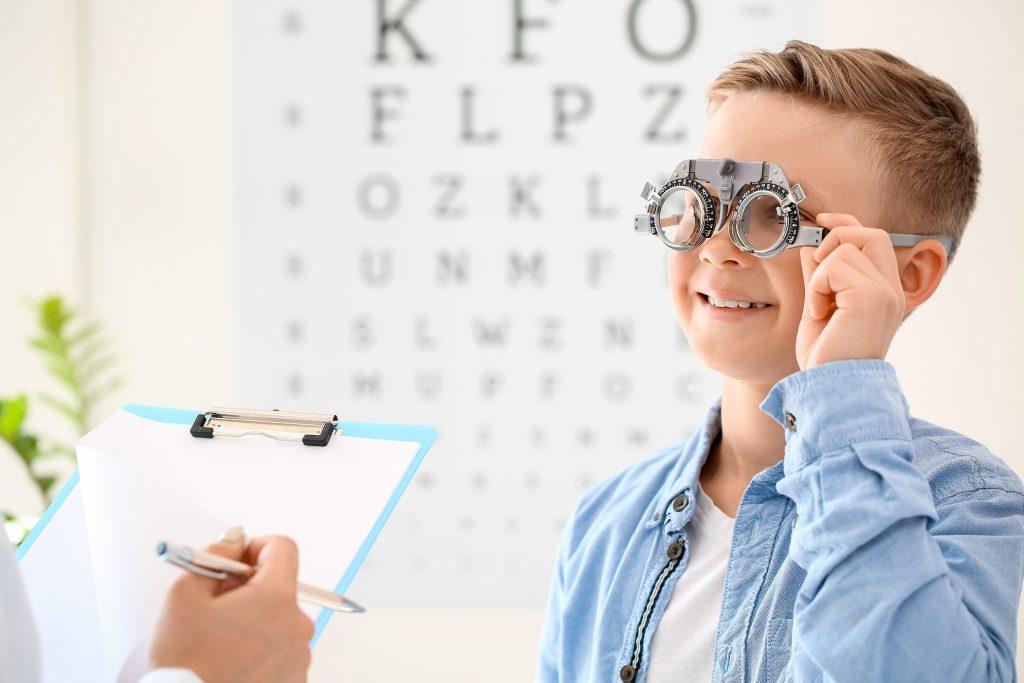
In short, visual health is a critical component of children's academic and social development. Undetected visual problems can negatively affect school performance and attention, leading to misdiagnosis and inadequate treatment. Regular eye examinations should therefore be an integral part of primary healthcare for children.
-
References
[1]: Falkenberg, H. K., Langaas, T., & Svarverud, E. (2019). Vision status of children aged 7-15 years referred from school vision screening in Norway during 2003-2013: a retrospective study.
https://dx.doi.org/10.1186/s12886-019-1178-y
https://bmcophthalmol.biomedcentral.com/track/pdf/10.1186/s12886-019-1178-y
[2]: Kirk, H., Gray, K., Riby, D., Taffe, J., & Cornish, K. (2017). Visual attention and academic performance in children with developmental disabilities and behavioural attention deficits.
https://dx.doi.org/10.1111/desc.12468
http://dro.dur.ac.uk/23456/1/23456.pdf
[3]: Alvarez-Peregrina, C., Sanchez-Tena, M. A., Andreu-Vázquez, C., & Villa-Collar, C. (2020). Visual Health and Academic Performance in School-Aged Children.
https://dx.doi.org/10.3390/ijerph17072346
https://www.mdpi.com/1660-4601/17/7/2346/pdf?version=1585624027